
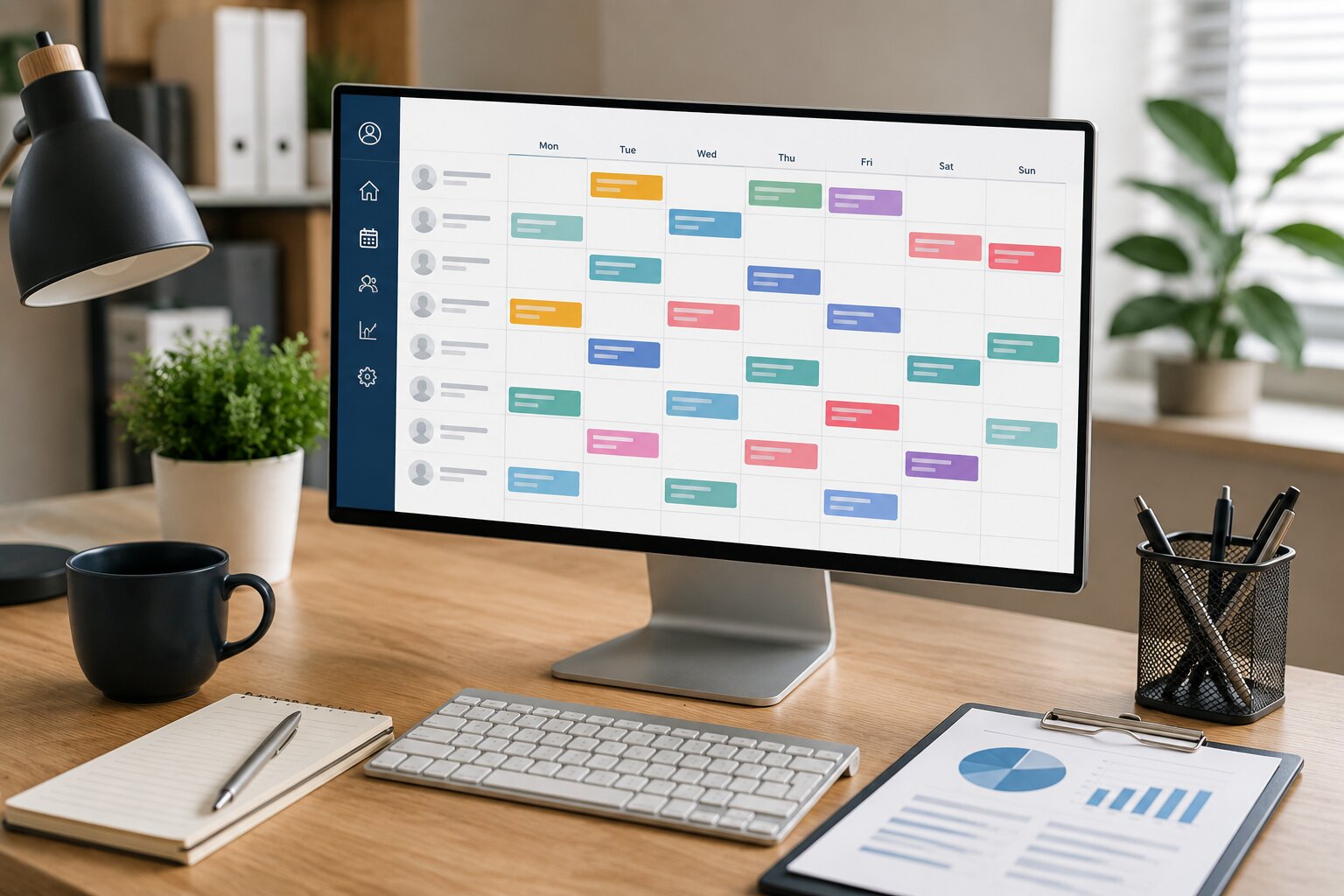
Creating an employee work schedule sounds simple until you have to balance employee availability, business demand, time-off requests, shift coverage, overtime, and unexpected absences at the same time. A schedule may look complete on paper, but if employees regularly request changes, managers spend hours making corrections, or shifts remain understaffed, the scheduling process is not actually working.
A good employee work schedule should do more than assign people to shifts. It should help the business maintain the right level of staffing while giving employees enough predictability to plan their work and personal responsibilities.
For growing businesses, having a consistent scheduling process becomes especially important. Manual spreadsheets and disconnected messages can make it difficult to keep everyone working from the same information. A structured approach, supported by employee scheduling software when needed, can make the entire process more reliable.
This guide explains how to create an employee work schedule that actually works, from understanding staffing requirements to publishing schedules, handling changes, and measuring scheduling performance.
What Is an Employee Work Schedule?
An employee work schedule is a plan that shows when employees are expected to work and, depending on the business, where and in what role they will work.
A schedule may include:
- Employee names
- Work dates
- Start and end times
- Shift assignments
- Departments or locations
- Roles or responsibilities
- Break information
- Days off
- Shift changes or notes
For a small office, an employee schedule may be relatively straightforward. For restaurants, retail stores, healthcare organizations, field service businesses, hospitality companies, and other shift-based workplaces, scheduling can become much more complicated.
The purpose of an effective schedule is to match available employees with actual business requirements.
Why Some Employee Work Schedules Don’t Work
Many scheduling problems are not caused by a lack of effort from managers. They happen because the scheduling process itself is too manual or does not account for all the information managers need.
For example, a manager might create a schedule based only on employee availability. But availability alone does not tell the manager how many employees are required during busy periods.
Another manager may focus heavily on filling every shift but overlook overtime. The result is a schedule that provides coverage but increases labor costs.
Other common problems include frequent last-minute changes, uneven shift distribution, employees being scheduled when they are unavailable, and outdated spreadsheets.
A schedule can therefore be technically complete while still being operationally ineffective.
Explore Employee Scheduling Best Practices for Managers
What Makes an Employee Work Schedule Effective?
An effective employee work schedule should balance several priorities.
First, it should provide sufficient staffing for expected business demand. Second, it should consider employee availability and reasonable preferences. Third, it should help control unnecessary overtime and labor costs.
The schedule should also be easy for employees to understand. If employees cannot easily determine when or where they are supposed to work, the schedule creates additional communication problems.
Finally, the schedule needs to be flexible enough to handle changes without requiring managers to rebuild the entire plan.
How to Create an Employee Work Schedule That Actually Works
1. Start With Your Business Needs
Before assigning employees to shifts, determine what the business actually needs.
Look at your operating hours, customer demand, workload patterns, busy periods, slower periods, and department requirements.
For example, a business may need additional employees during weekday afternoons but fewer employees during early mornings. A restaurant may require more staff during lunch and dinner, while a service company may need different staffing levels based on scheduled appointments.
Starting with business demand prevents managers from simply dividing hours equally among employees without considering actual workload.
The objective is to answer a simple question:
How many employees do we need, and when do we need them?
2. Determine the Required Skills for Each Shift
Having enough employees scheduled does not necessarily mean you have enough coverage.
Some shifts require employees with specific skills, certifications, experience, or responsibilities.
For example, a shift may require a supervisor, a trained technician, a licensed professional, or an employee who knows how to operate specific equipment.
When building the schedule, identify the skills required for each shift and make sure qualified employees are assigned.
This prevents a situation where a shift appears fully staffed but still cannot operate effectively.
3. Collect Current Employee Availability
Employee availability should be one of the first pieces of information you review before creating a schedule.
Employees may have different availability because of:
- Family responsibilities
- Transportation
- Education
- Second jobs
- Personal commitments
- Preferred working hours
- Other workplace responsibilities
Availability can also change over time.
Using outdated availability information can result in unnecessary scheduling conflicts and last-minute corrections.
A centralized scheduling process makes it easier to maintain current employee availability and use it during schedule creation.
4. Review Time-Off Requests Before Scheduling
Time-off requests should be checked before employees are assigned to shifts.
If a manager creates the schedule first and reviews time-off requests afterward, the schedule may need to be rebuilt.
Start by reviewing approved vacations, personal days, holidays, and other planned absences.
Then determine whether additional coverage is required.
This simple step can prevent many avoidable scheduling problems.
5. Understand Your Employee Preferences
Employee availability tells you when someone can work. Preferences tell you when they would ideally like to work.
These are not always the same.
For example, an employee may be available on weekends but prefer weekday shifts. Another employee may prefer morning shifts because of family responsibilities.
Managers cannot always satisfy every preference. Business requirements still come first. However, considering preferences when possible can make schedules more employee-friendly.
When employees feel their availability and reasonable preferences are considered, scheduling can become less frustrating.
6. Match Employees to the Right Shifts
Once you understand business requirements and employee availability, begin assigning employees to shifts.
The goal is to create the right combination of:
Coverage + Skills + Availability + Workload
Avoid assigning employees simply because they are available.
Instead, consider whether they are suitable for the shift and whether their assignment creates problems elsewhere in the schedule.
For example, assigning an employee to a late-night shift may affect their availability for an early-morning shift the next day.
Looking at the schedule as a complete picture rather than individual shifts can help prevent these problems.
7. Watch Employee Hours and Overtime
One of the biggest mistakes managers can make is focusing only on whether shifts are covered.
You also need to look at how many hours each employee is scheduled to work.
If one employee is repeatedly assigned additional shifts while other qualified employees have availability, overtime costs can increase unnecessarily.
Before publishing the schedule, review expected hours for each employee.
Ask:
- Is anyone approaching overtime?
- Are some employees receiving significantly more hours?
- Are additional shifts actually necessary?
- Can available employees be used more effectively?
- Are employees being scheduled for excessive consecutive shifts?
This review can improve both labor-cost control and workload balance.
8. Create a Fair Distribution of Shifts
Employees may not always receive identical schedules, but managers should aim for consistency and fairness.
Pay attention to how you distribute:
- Weekend shifts
- Evening shifts
- Opening shifts
- Closing shifts
- Holiday shifts
- Overtime opportunities
- High-demand shifts
If the same employees consistently receive less desirable shifts, they may perceive the scheduling process as unfair.
A structured scheduling process can help managers review patterns and make more balanced decisions.
9. Avoid Over-Scheduling
More employees do not always mean better performance.
Overstaffing can increase labor costs without improving productivity or customer service.
If a business regularly schedules more employees than it needs during slow periods, managers should examine whether staffing levels can be adjusted.
The goal is not to minimize employee hours at all costs. It is to align staffing levels with actual workload while maintaining appropriate coverage.
10. Avoid Under-Scheduling
The opposite problem can be equally damaging.
If too few employees are scheduled during busy periods, existing employees may become overloaded.
Customers may experience slower service, employees may become stressed, and managers may need to call people in at the last minute.
Understaffing can also lead to unnecessary overtime when employees have to stay longer to complete work.
An effective schedule therefore needs to balance both sides of the equation.
11. Build Schedules With Enough Notice
Employees need time to organize their lives around their work schedules.
Publishing a schedule as early as reasonably possible can help employees plan transportation, childcare, appointments, education, and personal responsibilities.
It also reduces the number of questions managers receive about upcoming shifts.
A predictable scheduling process can improve employee satisfaction because employees have greater visibility into their working hours.
For more information on the employee-experience side of scheduling, internally link “How Scheduling Software Improves Employee Satisfaction” to your existing article.
12. Make Schedule Information Easy to Access
An employee should not have to search through multiple emails or contact a manager every time they want to know their next shift.
Employees should have a clear place to access the current schedule.
This becomes especially important when schedules change.
If one employee is using an old spreadsheet while another is looking at a new version, confusion can quickly occur.
A centralized schedule gives everyone access to the same information.
13. Create a Clear Process for Shift Swaps
Employees sometimes need to change shifts because of unexpected personal responsibilities.
A clear shift-swap process can provide flexibility without creating scheduling chaos.
Employees should know:
- How to request a shift swap
- Who needs to approve it
- Which employees can cover the shift
- When the change becomes official
- Where the updated schedule will be recorded
Informal changes through text messages or verbal conversations can create confusion if the official schedule is not updated.
14. Have a Plan for Last-Minute Absences
No schedule is completely protected from unexpected absences.
Employees may call out because of illness, emergencies, or other unforeseen situations.
Managers should have a consistent process for finding replacements.
Start by identifying qualified employees who are available. Then consider existing workload, scheduled hours, overtime, and employee availability before assigning coverage.
A centralized scheduling system can make this process easier by providing managers with a clearer view of who is available.
15. Review the Schedule Before Publishing
A final review can catch problems before employees see the schedule.
Before publishing, check:
- Coverage for every required shift
- Employee availability
- Approved time off
- Required skills
- Overtime risk
- Double-booked employees
- Excessive consecutive shifts
- Weekend and holiday distribution
- Location assignments
- Expected business demand
This review does not need to take hours. With a structured scheduling process, it can become a standard part of schedule creation.
Employee Work Schedule Example
Consider a business that operates seven days a week.
The manager determines that weekday mornings require three employees, weekday afternoons require five, and weekends require six.
Instead of assigning employees randomly, the manager can first identify the required coverage and then match employees based on availability and skills.
The manager may also notice that one employee has already been scheduled for a significant number of hours while another qualified employee has availability.
By adjusting the assignments before publishing the schedule, the manager can improve workload distribution and potentially reduce overtime.
The important point is that the schedule is built around both business demand and employee information rather than one factor alone.
Manual Scheduling vs. Scheduling Software
Manual scheduling can work when a business has a small number of employees and relatively predictable working hours.
As the team grows, however, scheduling becomes more difficult.
Managers may need to compare spreadsheets, emails, availability records, time-off requests, and messages just to create one weekly schedule.
Employee scheduling software provides a centralized way to manage this information.
It can make it easier to create schedules, communicate changes, manage employee availability, and maintain a current version of the schedule.
Also Read : Manual Scheduling vs. Scheduling Software: Which Is Better for Your Business?
When Should a Business Consider Scheduling Software?
Not every business needs sophisticated scheduling technology immediately.
However, scheduling software becomes increasingly useful when managers regularly experience problems such as:
- Spending hours creating schedules
- Frequent schedule conflicts
- Repeated last-minute changes
- Difficulty tracking availability
- Excessive overtime
- Multiple locations or departments
- Large numbers of employees
- Frequent shift swaps
- Employees asking managers for schedule information
- Multiple versions of the same schedule
If scheduling has become a recurring administrative burden, it may be time to consider a more centralized approach.
How Employee Scheduling Software Can Improve the Process
Employee scheduling software can simplify several parts of the scheduling process.
Centralized Scheduling
Managers can maintain schedules in one location rather than relying on multiple documents.
Better Schedule Visibility
Employees can access their schedules without repeatedly contacting managers.
Easier Schedule Changes
Managers can update schedules and communicate changes more efficiently.
Availability Management
Employee availability can be maintained and considered during schedule creation.
Shift Management
Managers can organize employees around specific shifts and staffing requirements.
Better Workforce Visibility
Managers can get a clearer view of workforce coverage and scheduled hours.
The exact capabilities depend on the software, but the underlying benefit is the same: reducing unnecessary manual scheduling work.
How to Make Employee Scheduling More Efficient Over Time
Creating one good schedule is not enough.
Businesses should review scheduling performance regularly and identify patterns.
For example, if a manager frequently needs to add employees to Friday afternoon shifts, that may indicate that staffing requirements are consistently underestimated.
If employees frequently request changes to a particular shift, managers should investigate whether the shift is inconvenient or whether availability information is outdated.
If overtime consistently occurs in the same department, staffing levels or scheduling practices may need to be reviewed.
Scheduling should therefore be treated as an ongoing process rather than a task that ends when the schedule is published.
Track Scheduling Performance
Businesses can evaluate their scheduling process using practical measures such as:
Overtime
Monitor whether scheduling decisions are consistently creating unnecessary overtime.
Schedule Changes
Track how often schedules change after publication.
Unfilled Shifts
Review whether required shifts regularly remain uncovered.
Absences
Look for patterns that may indicate scheduling or workload issues.
Employee Feedback
Pay attention to recurring complaints about shift timing, fairness, or schedule predictability.
Manager Time
Measure how much time managers spend creating and correcting schedules.
These indicators can show whether your scheduling process is actually working.
Common Employee Scheduling Mistakes to Avoid
Creating the Schedule Without Looking at Demand
A schedule should reflect expected workload, not simply employee availability.
Ignoring Availability
Scheduling employees when they cannot work creates unnecessary changes.
Overusing the Same Employees
Relying on the same employees for extra shifts can increase overtime and fatigue.
Making Last-Minute Changes Too Often
Frequent changes can make employees feel that their time is unpredictable.
Using Multiple Schedule Versions
Different versions of a schedule can create confusion.
Failing to Review the Final Schedule
Small errors can become major operational problems when they are discovered after publication.
Treating Every Employee the Same
Fairness does not necessarily mean identical schedules. Roles, availability, skills, and business requirements can differ.
Best Practices for Creating an Employee Work Schedule
A reliable scheduling process can be summarized with a few practical principles:
Start with demand. Understand when your business actually needs employees.
Use accurate employee information. Keep availability, time-off requests, and skills current.
Balance coverage and cost. Avoid both unnecessary overstaffing and damaging understaffing.
Watch employee hours. Identify overtime and excessive workloads before the schedule is published.
Create predictable schedules. Give employees reasonable notice whenever possible.
Communicate changes clearly. Make sure employees know where to find the current schedule.
Review scheduling performance. Use data and employee feedback to improve future schedules.
How Office1Solution Can Support Better Workforce Scheduling
A structured scheduling process can help businesses reduce the administrative effort involved in managing employee schedules.
Office1Solution provides workforce management tools designed to help businesses organize employee scheduling and related workforce processes.
For businesses that are still managing schedules through spreadsheets, paper, or disconnected communication, moving toward a centralized scheduling process can provide better visibility and make schedule management easier.
The goal is not simply to automate scheduling. It is to create a more reliable process where managers can understand staffing needs, employees can access their schedules, and schedule changes can be managed efficiently.
Explore Workforce Management Software
Frequently Asked Questions
How do I create a good employee work schedule?
Start by understanding business demand, determine required staffing and skills, collect employee availability, review time-off requests, assign employees to appropriate shifts, monitor overtime, and review the final schedule before publishing.
What should be included in an employee schedule?
An employee schedule should generally include employee names, work dates, start and end times, shift assignments, and locations or roles when relevant.
How far in advance should an employee schedule be made?
The appropriate notice period depends on the business and workforce. In general, publishing schedules as early as reasonably possible gives employees greater predictability and makes personal planning easier.
How can I reduce employee scheduling conflicts?
Keep availability current, review time-off requests before scheduling, avoid overlapping assignments, maintain one official schedule, and establish a clear process for schedule changes.
How can I reduce overtime when creating schedules?
Review expected employee hours before publishing the schedule, distribute available shifts appropriately, and compare staffing requirements with employee availability. Scheduling software can also provide greater visibility into scheduled hours.
Is Excel good for employee scheduling?
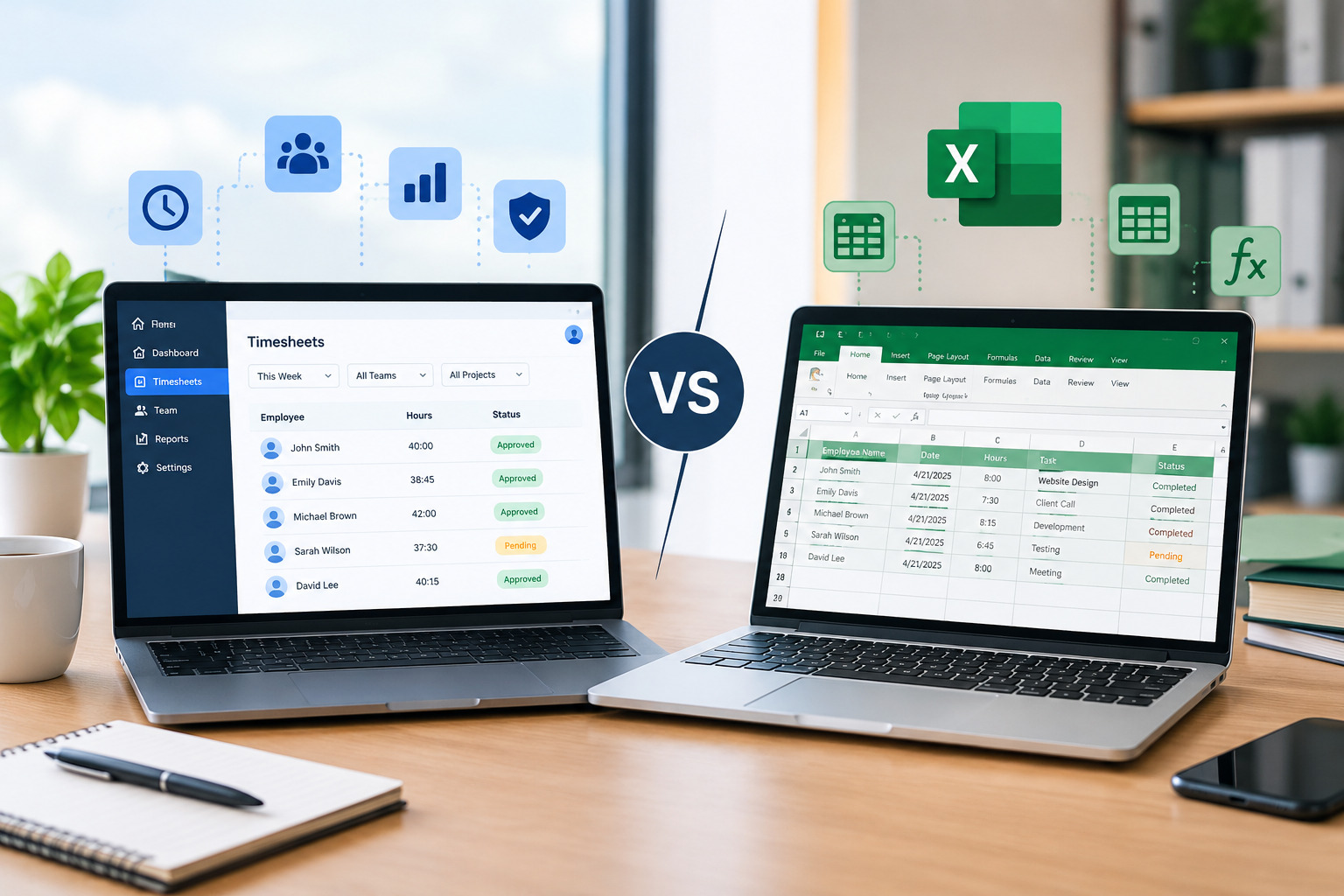
Excel can work for small teams with relatively simple schedules. However, as the number of employees, shifts, locations, and schedule changes increases, spreadsheets can become difficult to maintain and update.
Can scheduling software replace manual scheduling?
Scheduling software can automate and simplify many parts of scheduling, but managers still need to make workforce decisions based on business requirements, employee needs, and operational priorities.
Final Thoughts
A work schedule that actually works is not simply a list of employees and working hours. It is the result of balancing business demand, employee availability, skills, workload, labor costs, and operational requirements.
The most effective scheduling process starts with understanding when the business needs employees and then matching those requirements with qualified, available workers.
Managers should also review overtime, distribute shifts fairly, provide reasonable schedule notice, and establish clear processes for changes and absences.
As scheduling becomes more complex, relying entirely on spreadsheets and manual communication can make the process difficult to manage. A centralized scheduling solution can help businesses improve visibility, reduce administrative work, and create a more consistent scheduling experience.
Ultimately, the best employee work schedule is one that works for the business, the manager, and the employees.
Recent Posts
- Time and Attendance Software: Complete Guide for Employers

- Time and Attendance: What’s the Difference Between the Two?

- How to Reduce Timesheet Errors and Improve Payroll Accuracy

- Timesheet App for Employees: Features, Benefits & Best Practices

- Timesheet Software vs. Excel: Which Is Better for Businesses?
Stay Ahead. Simplify Workforce Management.
Empower your teams to work efficiently with a unified workforce platform built for clarity, control, and actionable insights across your organization.