
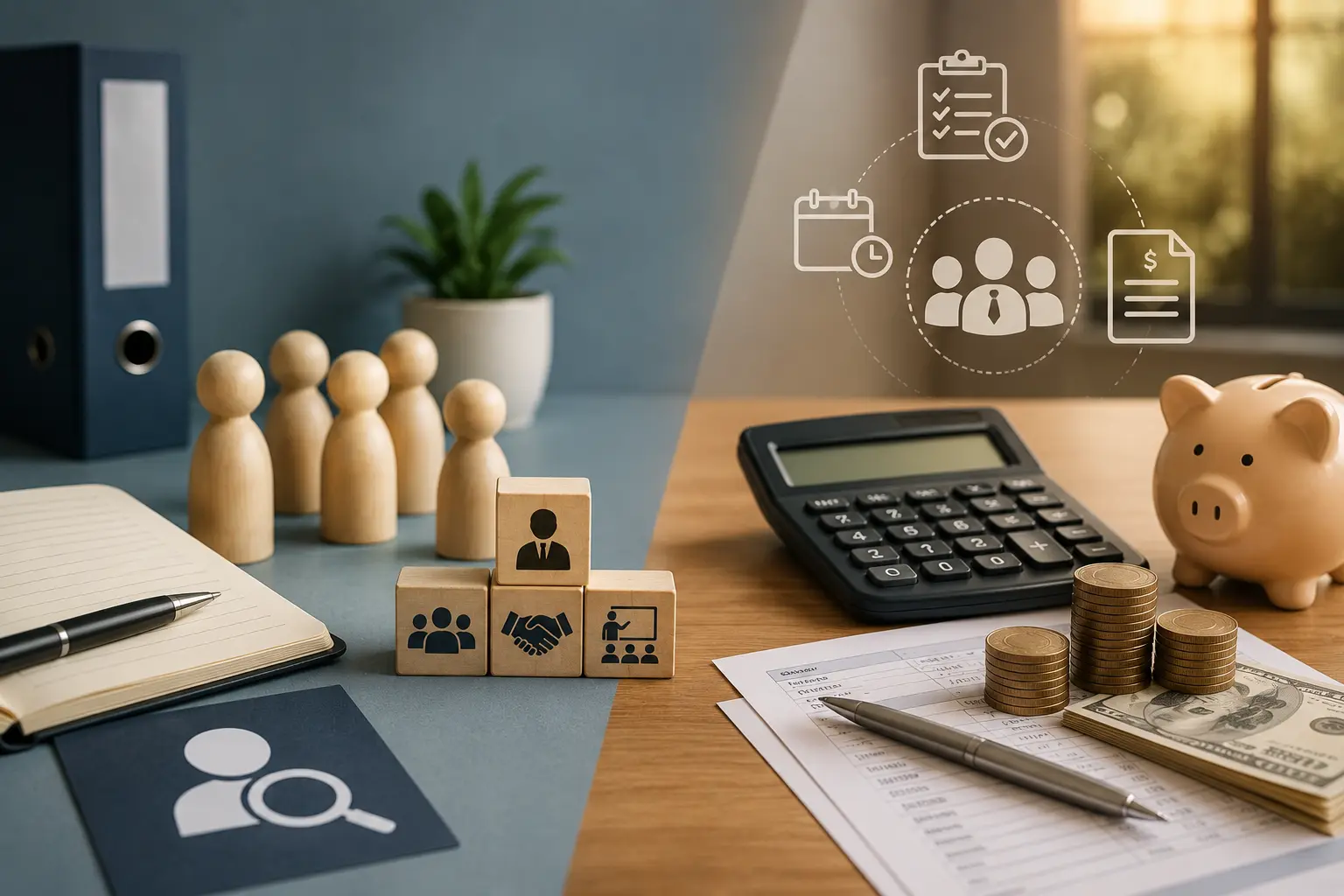
Human Resources and Payroll are two of the most important operational functions within any organization. Although they often work closely together, many businesses still confuse the responsibilities of HR and payroll or assume both departments perform the same tasks.
In reality, Human Resources and Payroll serve very different purposes. HR focuses on employee management, workplace policies, recruitment, compliance, and workforce development, while Payroll is primarily responsible for employee compensation, tax calculations, and payment processing.
Understanding the difference between HR and payroll is essential for businesses that want to improve workforce efficiency, maintain compliance, and streamline employee operations.
In this guide, we’ll explain the key differences between Human Resources and Payroll, their responsibilities, how they work together, and why workforce management technology is becoming increasingly important for modern organizations.
What Is Human Resources (HR)?
Human Resources, commonly known as HR, is the department responsible for managing employees throughout their entire employment lifecycle.
HR plays a strategic role in building workplace culture, supporting employees, improving productivity, and ensuring organizations follow labor laws and workplace policies.
The HR department is involved in many areas of workforce management, including:
- Recruitment and hiring
- Employee onboarding
- Training and development
- Performance management
- Employee engagement
- Workplace compliance
- Conflict resolution
- Benefits administration
In modern organizations, HR is no longer limited to administrative tasks. HR teams now contribute directly to employee retention, business growth, workforce planning, and operational strategy.
Also read : HR Metrics in 2026: Driving Business Success Through People Analytics
What Is Payroll?
Payroll is the process of calculating and distributing employee wages accurately and on time. The payroll function focuses primarily on financial compensation and maintaining payroll compliance.
Payroll responsibilities typically include:
- Salary processing
- Wage calculations
- Overtime calculations
- Tax deductions
- Direct deposits
- Pay stub generation
- Payroll reporting
- Compliance with tax regulations
Payroll accuracy is critical because errors can quickly lead to employee dissatisfaction, compliance penalties, and operational disruptions.
Businesses managing hourly employees, remote workers, contractors, or multiple shifts often face additional payroll complexity due to attendance tracking and overtime calculations.
Why Businesses Often Confuse HR and Payroll
HR and Payroll work closely together because employee compensation depends on accurate workforce data.
For example:
- HR manages employee records
- Payroll uses those records for salary processing
- HR handles employee onboarding
- Payroll sets up compensation details
- HR manages attendance policies
- Payroll calculates employee wages
Because both departments rely heavily on employee data, businesses sometimes combine HR and payroll functions, especially in smaller organizations.
However, as businesses grow, separating responsibilities becomes important for improving efficiency and reducing errors.
Key Difference Between HR and Payroll
The simplest way to understand the difference is:
- HR manages people
- Payroll manages employee payments
HR focuses on workforce development and employee operations, while payroll focuses on compensation accuracy and financial compliance.
Although the departments overlap in some areas, their core responsibilities remain very different.
Also read : Core of Smarter Workforce Management
HR Responsibilities Explained
Human Resources plays a major role in shaping company culture and workforce performance.
Recruitment and Hiring
HR teams are responsible for attracting, interviewing, and hiring employees. This includes:
- Job postings
- Candidate screening
- Interview coordination
- Offer management
Strong hiring processes help businesses build productive teams.
Employee Onboarding
Once employees are hired, HR manages onboarding processes such as:
- Documentation
- Policy training
- Orientation
- System access
- Employee setup
Effective onboarding improves employee engagement and retention.
Performance Management
HR teams help monitor employee productivity and performance through:
- Performance reviews
- Feedback systems
- Goal tracking
- Development planning
Modern organizations increasingly use workforce analytics and performance tracking tools to improve workforce visibility.
Compliance and Employee Relations
HR departments also manage:
- Workplace policies
- Employee complaints
- Labor law compliance
- Conflict resolution
- Workplace investigations
Maintaining fair workplace policies helps reduce legal and operational risks.
Payroll Responsibilities Explained
Payroll departments focus on ensuring employees are compensated correctly and on time.
Salary and Wage Processing
Payroll teams calculate employee earnings based on:
- Salary agreements
- Hourly work hours
- Overtime
- Bonuses
- Commissions
Accurate payroll processing is essential for maintaining employee trust.
Tax Calculations and Deductions
Payroll is responsible for handling:
- Income tax deductions
- Payroll taxes
- Social Security contributions
- Retirement deductions
- Insurance deductions
Incorrect tax calculations can create compliance problems and financial penalties.
Attendance and Time Tracking Integration
For hourly or shift-based businesses, payroll depends heavily on accurate attendance records.
Payroll systems often integrate with:
- Time tracking software
- Employee scheduling systems
- Attendance management tools
This improves payroll accuracy while reducing manual administrative work.
Payroll Compliance
Payroll departments must ensure compliance with:
- Wage laws
- Overtime regulations
- Tax filing deadlines
- Employee classification requirements
Businesses operating across multiple states or regions often face complex payroll compliance requirements.
How HR and Payroll Work Together
Although HR and payroll have different responsibilities, both departments depend on accurate workforce data and close collaboration.
For example:
- HR updates employee information
- Payroll uses those records for salary processing
- HR manages leave policies
- Payroll calculates paid leave compensation
- HR tracks employee status changes
- Payroll adjusts compensation accordingly
Without proper coordination between HR and payroll, businesses may experience:
- Payroll delays
- Incorrect payments
- Compliance issues
- Employee dissatisfaction
This is why many organizations now use integrated workforce management systems that centralize employee operations and payroll data.
Common Challenges Businesses Face
As businesses grow, managing HR and payroll separately can create operational complexity.
Some common challenges include:
- Manual payroll errors
- Attendance tracking issues
- Employee record inconsistencies
- Overtime calculation mistakes
- Delayed approvals
- Compliance risks
Remote and distributed workforces create additional challenges because managers need better workforce visibility and centralized employee data.
Without integrated systems, businesses often waste significant time managing disconnected processes.
HR vs. Payroll: Which Is More Important?
Both HR and payroll are essential for business success.
HR helps organizations:
- Build strong teams
- Improve workplace culture
- Increase employee retention
- Manage workforce performance
Payroll ensures:
- Employees are paid accurately
- Tax obligations are met
- Compensation processes remain compliant
A business cannot operate effectively without both functions working together efficiently.
How Workforce Management Software Helps Businesses
Modern workforce management software helps organizations simplify both HR and payroll operations by centralizing workforce data in one platform.
Integrated workforce systems help businesses:
- Track employee attendance
- Manage scheduling
- Monitor overtime
- Improve payroll accuracy
- Store employee records
- Simplify reporting
- Improve compliance visibility
Office1Solution helps organizations streamline workforce operations with tools for employee scheduling, attendance tracking, timesheets, workforce reporting, and operational visibility.
By centralizing workforce data, businesses can reduce manual work, improve payroll accuracy, and support better HR decision-making.
Benefits of Integrating HR and Payroll Systems
Integrated workforce systems provide several advantages for modern businesses.
Improved Accuracy
Centralized employee data reduces duplicate entries and payroll mistakes.
Better Workforce Visibility
Managers gain real-time visibility into:
- Attendance
- Scheduling
- Productivity
- Overtime
Reduced Administrative Work
Automation reduces manual processes related to:
- Payroll calculations
- Attendance tracking
- Employee reporting
Stronger Compliance Management
Integrated systems help businesses maintain:
- Labor law compliance
- Payroll accuracy
- Employee record consistency
Future of HR and Payroll Management
As businesses continue adapting to remote work, flexible scheduling, and distributed teams, HR and payroll operations are becoming increasingly technology-driven.
Modern workforce management platforms now support:
- Cloud-based workforce tracking
- Automated payroll processing
- Workforce analytics
- Mobile attendance tracking
- Real-time reporting
Organizations that invest in integrated workforce management systems are better positioned to improve productivity, compliance, and operational efficiency.
Frequently Asked Questions
What is the main difference between HR and payroll?
HR manages employee operations and workforce development, while payroll focuses on salary processing and compensation management.
Does HR handle payroll?
In some small businesses, HR may assist with payroll tasks, but payroll is usually a separate function in larger organizations.
Why is payroll important?
Payroll ensures employees are paid accurately and businesses remain compliant with tax and labor laws.
How does workforce software help HR and payroll?
Workforce management software centralizes attendance, scheduling, payroll, and employee records to improve operational efficiency.
Can payroll operate without HR?
Payroll can process payments independently, but accurate payroll depends heavily on HR-managed employee data.
Final Thoughts
Human Resources and Payroll are both essential components of workforce management, but they serve different business functions. HR focuses on managing people, culture, and employee development, while payroll ensures employees are compensated accurately and compliantly.
As workforce operations become more complex, businesses increasingly need integrated systems that connect HR, payroll, attendance, scheduling, and workforce reporting into one centralized platform.
Organizations that combine strong HR practices with modern workforce management technology can improve operational efficiency, reduce compliance risks, and create better employee experiences for long-term business success.
Recent Posts
- Time and Attendance Software: Complete Guide for Employers
- Time and Attendance: What’s the Difference Between the Two?
- How to Reduce Timesheet Errors and Improve Payroll Accuracy
- Timesheet App for Employees: Features, Benefits & Best Practices

- Timesheet Software vs. Excel: Which Is Better for Businesses?
Stay Ahead. Simplify Workforce Management.
Empower your teams to work efficiently with a unified workforce platform built for clarity, control, and actionable insights across your organization.