

Employee productivity is one of the most important factors influencing business growth, profitability, and operational efficiency. Organizations invest heavily in technology, training, and workforce management strategies to help employees perform at their best. However, despite these efforts, many businesses continue to struggle with productivity challenges that limit team performance and overall business success.
In most cases, productivity problems are not caused by employees lacking skills or motivation. Instead, they are often the result of workplace roadblocks that prevent employees from focusing on meaningful work. Poor communication, inefficient processes, unclear expectations, outdated systems, and excessive administrative tasks can all create barriers that reduce performance.
For managers and business leaders, identifying and removing these roadblocks is essential for building a productive, engaged, and high-performing workforce.
In this guide, we’ll explore the most common employee productivity roadblocks, their impact on workplace performance, and practical solutions organizations can implement to improve efficiency and workforce productivity.
Why Employee Productivity Matters
Employee productivity directly affects an organization’s ability to achieve its goals. When employees can work efficiently and focus on high-value activities, businesses experience improved customer service, stronger financial performance, and greater operational stability.
High productivity helps organizations:
- Complete projects faster
- Improve customer satisfaction
- Increase profitability
- Reduce operational costs
- Support business growth
- Improve employee engagement
On the other hand, productivity challenges often lead to missed deadlines, increased stress, higher turnover rates, and reduced organizational performance.
As businesses continue adapting to hybrid work, remote teams, and evolving workforce expectations, understanding productivity barriers has become more important than ever.
Also read : Productivity vs. Efficiency: Key Differences Every Manager Should Know (2026 Guide)
What Are Employee Productivity Roadblocks?
Employee productivity roadblocks are obstacles that prevent employees from completing their work efficiently or achieving expected performance levels.
These barriers can be operational, technological, managerial, or cultural.
Some productivity roadblocks are obvious, such as outdated software or excessive workloads. Others are more difficult to identify because they develop gradually over time through poor processes or ineffective management practices.
The key for managers is recognizing these issues early before they negatively affect workforce performance and employee morale.
Roadblock #1: Poor Communication
Communication problems remain one of the biggest causes of reduced workplace productivity.
Employees rely on accurate information to perform their jobs effectively. When communication is unclear, delayed, or inconsistent, employees spend valuable time seeking clarification, correcting mistakes, and dealing with misunderstandings.
Poor communication often appears in the form of:
- Conflicting instructions
- Unclear expectations
- Delayed feedback
- Lack of project updates
- Information silos between departments
When employees don’t have the information they need, productivity naturally declines.
How to Fix It
Organizations should establish clear communication processes and ensure employees know where to access important information.
Managers can improve communication by:
- Holding regular team meetings
- Setting clear expectations
- Using centralized communication tools
- Providing timely feedback
- Encouraging open discussions
Strong communication creates alignment and helps employees stay focused on priorities.
Roadblock #2: Unclear Goals and Expectations
Employees perform best when they understand exactly what is expected of them.
Unfortunately, many productivity issues begin when employees lack clear direction.
Without defined goals, employees may:
- Prioritize the wrong tasks
- Duplicate efforts
- Miss deadlines
- Struggle to measure success
This confusion creates frustration and often leads to decreased productivity.
How to Fix It
Managers should establish measurable objectives and communicate them clearly.
Employees should understand:
- Their responsibilities
- Performance expectations
- Deadlines
- Business priorities
Goal-setting frameworks such as SMART goals can help create clarity and accountability throughout the organization.
Roadblock #3: Excessive Meetings
Meetings are intended to improve collaboration, but too many meetings can quickly become a major productivity drain.
Employees frequently report spending large portions of their workday attending meetings that provide little value.
Excessive meetings often:
- Interrupt deep work
- Reduce focus time
- Delay project completion
- Increase employee frustration
In some organizations, meetings become routine rather than necessary.
How to Fix It
Managers should evaluate every meeting and ask whether it is truly required.
Organizations can improve productivity by:
- Reducing unnecessary meetings
- Setting clear agendas
- Limiting meeting length
- Using asynchronous communication when appropriate
Protecting employee focus time often leads to significant productivity improvements.
Roadblock #4: Inefficient Processes
Even highly skilled employees struggle when workflows are inefficient.
Many organizations continue using outdated processes that create unnecessary administrative work and delays.
Examples include:
- Manual approvals
- Duplicate data entry
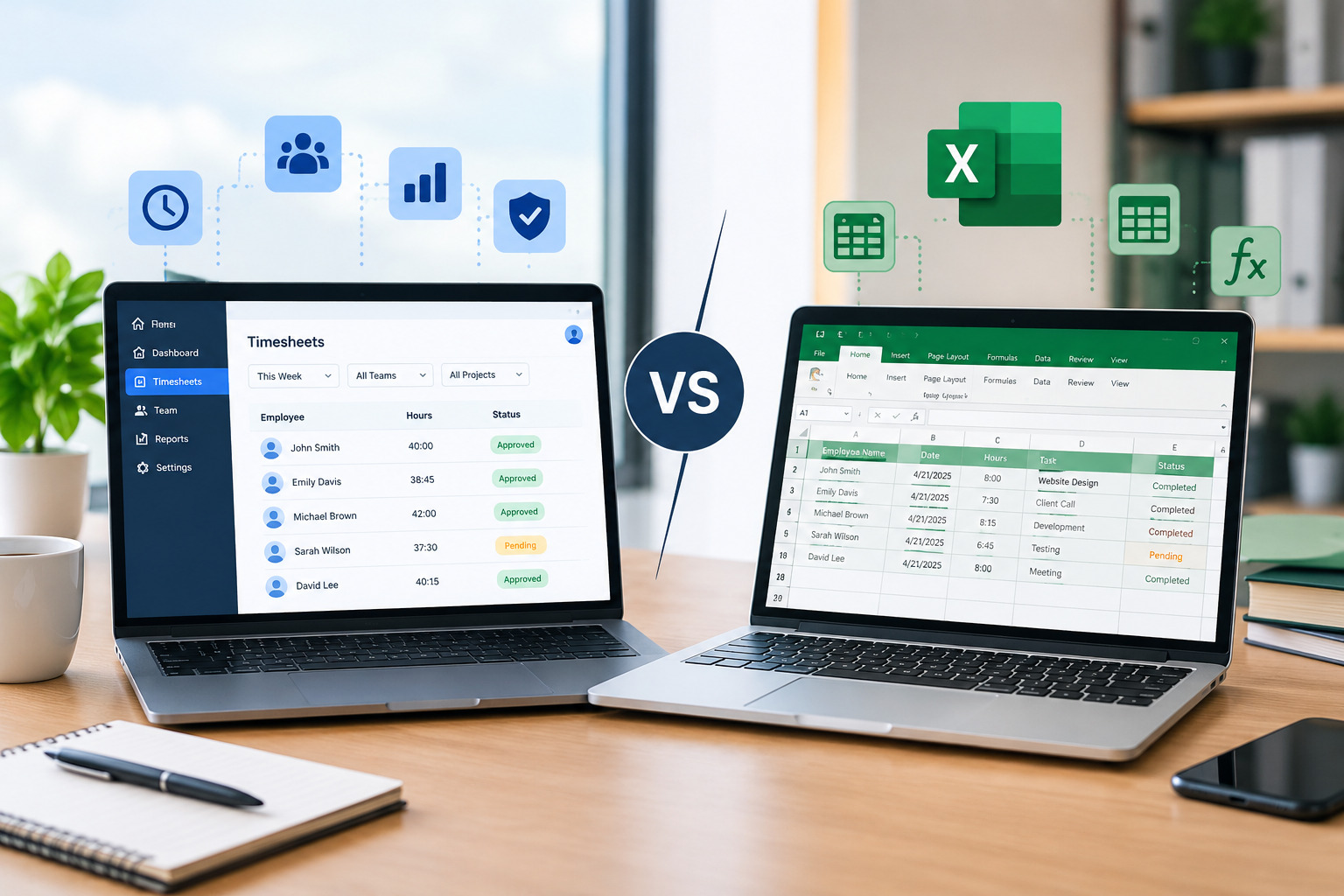
- Spreadsheet-based tracking
- Multiple disconnected systems
These inefficiencies consume valuable employee time and reduce overall productivity.
How to Fix It
Businesses should regularly review workflows and identify opportunities for automation and process improvement.
Simplifying workflows allows employees to spend more time on productive activities rather than administrative tasks.
Roadblock #5: Lack of Workforce Visibility
Managers cannot improve productivity if they lack visibility into workforce performance.
Many organizations struggle because they cannot accurately monitor:
- Employee attendance
- Work hours
- Task progress
- Team capacity
- Scheduling conflicts
Without reliable workforce data, managers often make decisions based on assumptions rather than facts.
How to Fix It
Modern workforce management software provides real-time visibility into workforce operations.
Organizations can track:
- Attendance
- Scheduling
- Productivity trends
- Work hours
- Employee performance metrics
Improved visibility allows managers to identify issues before they become major productivity problems.
Also read : Employee Productivity: Complete Guide to Measuring and Improving Workplace Performance (2026)
Roadblock #6: Technology and System Challenges
Technology should support employee productivity, not slow it down.
Unfortunately, outdated systems often create significant productivity barriers.
Employees may waste time dealing with:
- Slow software
- System downtime
- Multiple logins
- Poor integrations
- Manual reporting
When technology becomes difficult to use, employees spend more time managing systems than completing actual work.
How to Fix It
Businesses should evaluate whether current technology supports operational goals.
Investing in modern workforce management solutions can help streamline operations and reduce administrative burdens.
Integrated systems allow employees to access information more efficiently and focus on higher-value work.
Roadblock #7: Workplace Distractions
Distractions can significantly reduce employee productivity.
Common workplace distractions include:
- Constant notifications
- Interruptions from coworkers
- Social media
- Non-essential emails
- Multitasking
Research consistently shows that interruptions make it difficult for employees to maintain focus and return to complex tasks.
How to Fix It
Organizations should create environments that support concentration and focused work.
Managers can encourage:
- Dedicated focus periods
- Reduced notifications
- Clear communication boundaries
- Prioritization of important tasks
Helping employees protect their attention often leads to measurable productivity gains.
Roadblock #8: Employee Burnout
Productivity does not increase indefinitely as workloads increase.
In fact, excessive workloads often lead to burnout, which significantly reduces performance.
Burnout can cause:
- Decreased motivation
- Lower quality work
- Increased absenteeism
- Higher turnover
- Reduced engagement
Employees who are constantly overwhelmed struggle to maintain productivity over time.
How to Fix It
Organizations should monitor workloads and encourage healthy work habits.
Managers can help prevent burnout by:
- Balancing workloads
- Encouraging time off
- Supporting flexible work arrangements
- Recognizing employee contributions
Sustainable productivity requires employees who are engaged and well-supported.
Roadblock #9: Poor Time Management
Time management challenges can affect productivity at every level of an organization.
Employees often struggle with:
- Task prioritization
- Planning workloads
- Managing deadlines
- Balancing competing responsibilities
Without effective time management skills, even talented employees may struggle to achieve consistent results.
How to Fix It
Managers should provide training and tools that help employees organize their work effectively.
Techniques such as:
- Time blocking
- Task prioritization
- Project planning
- Workload management
can significantly improve productivity.
Roadblock #10: Lack of Employee Engagement
Engaged employees are generally more productive, innovative, and committed to organizational success.
When engagement declines, productivity often follows.
Employees who feel disconnected from their work may:
- Do the minimum required
- Avoid taking initiative
- Show reduced enthusiasm
- Become less collaborative
How to Fix It
Organizations should create environments where employees feel valued and connected to business goals.
This includes:
- Recognition programs
- Career development opportunities
- Meaningful feedback
- Transparent leadership
Employee engagement plays a major role in long-term productivity.
How Workforce Management Software Helps Remove Productivity Roadblocks
Modern workforce management software provides organizations with tools that address many of the productivity challenges discussed above.
Workforce management platforms help businesses:
- Track attendance
- Manage schedules
- Monitor work hours
- Improve visibility
- Streamline approvals
- Generate reports
- Reduce manual processes
By centralizing workforce information, organizations can eliminate inefficiencies and create more productive work environments.
Office1Solution helps businesses improve workforce productivity through employee scheduling, attendance tracking, timesheet management, reporting, and workforce visibility tools designed for modern organizations.
Creating a Productivity-Focused Workplace
Improving productivity isn’t about pushing employees to work harder. It’s about removing obstacles that prevent them from doing their best work.
Organizations that consistently improve productivity focus on:
- Better communication
- Clear goals
- Efficient processes
- Employee engagement
- Workforce visibility
- Technology optimization
When these elements work together, employees can focus on meaningful work that drives business results.
Frequently Asked Questions
What are productivity roadblocks?
Productivity roadblocks are obstacles that prevent employees from completing work efficiently, such as poor communication, outdated systems, unclear goals, and inefficient processes.
Why is employee productivity important?
Employee productivity affects operational efficiency, customer satisfaction, profitability, and business growth.
How can managers improve workplace productivity?
Managers can improve productivity by removing workflow obstacles, improving communication, providing better tools, and creating clear expectations.
What causes low employee productivity?
Common causes include poor communication, excessive meetings, workplace distractions, burnout, and inefficient workflows.
How does workforce management software improve productivity?
Workforce management software improves visibility, scheduling, attendance tracking, reporting, and operational efficiency, helping businesses remove productivity barriers.
Final Thoughts
Employee productivity roadblocks are often hidden beneath daily operations, making them difficult to identify and address. However, organizations that proactively remove these obstacles create more efficient processes, improve employee engagement, and achieve stronger business results.
By focusing on communication, technology, workforce visibility, and process improvement, managers can create environments where employees are empowered to perform at their highest potential. Modern workforce management solutions further support these efforts by providing the tools and insights needed to optimize productivity across the organization.
Recent Posts
- Time and Attendance Software: Complete Guide for Employers

- Time and Attendance: What’s the Difference Between the Two?

- How to Reduce Timesheet Errors and Improve Payroll Accuracy

- Timesheet App for Employees: Features, Benefits & Best Practices

- Timesheet Software vs. Excel: Which Is Better for Businesses?
Stay Ahead. Simplify Workforce Management.
Empower your teams to work efficiently with a unified workforce platform built for clarity, control, and actionable insights across your organization.